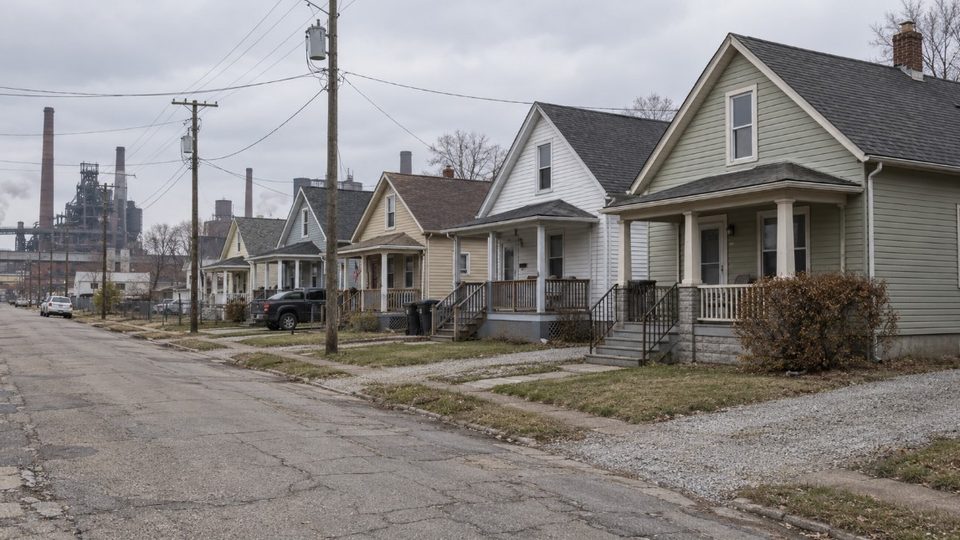
The Lowest Residential Ground in Janesville
Blackbridge sits low on the Rock River on the north side of the city, and it is one of the first areas to see groundwater rise when the river does. That single fact explains most of what happens in these basements, and it is the reason advice written for other parts of the county does not fit here.
The distinction worth understanding is between rainfall and river level. In most of Janesville a wet basement follows a heavy rain. Here it follows the river, which may have risen because of rain that fell fifty miles upstream three days ago. Owners describe basements filling on a clear day, and they are describing exactly what happened.
June 2008
The extreme case. The Rock ran at a level not seen in living memory across southern Wisconsin after prolonged rain on already-saturated ground, and basements took water throughout the low-lying river communities. Sixteen years on, the lasting problem in this neighborhood is not the flood itself — it is what was left in the walls afterwards. A great many properties were pumped out, dried with fans over a week or two, and put back together with the original drywall and insulation still in place because the surface felt dry.
River flood water is Category 3: biologically contaminated. Porous material that has been in it comes out, regardless of how dry it subsequently feels. Where that did not happen, the result is a persistent musty basement that nobody can account for and that no amount of dehumidification resolves. If your property took water in 2008 and the finishes were never removed, that is the most useful thing you can tell us on a call.
Serving Blackbridge, WI
Call and tell us what is happening in your Blackbridge property. A specialist will talk it through with you — free, and with no obligation.
(608) 724-1919Free phone consultation.
Sump Systems Doing More Than They Were Sized For
A pump adequate for an ordinary spring is not adequate for a river-driven water table. In this neighborhood the pit refills faster and for longer than pump manufacturers' typical assumptions, and two failure modes then compound: the pump cannot keep up, and the storm that raised the river takes out the power.
What works here, specifically: a pump sized for the actual pit recovery rate rather than the default, a second pump on a higher float, and a battery or water-powered backup. That is a few hundred dollars of equipment against a five-figure finished basement remediation, and in Blackbridge it is not an optional refinement.
Modest Foundations
Much of the housing here is early twentieth century and was built economically: shallow footings, early block or stone, and no exterior damp-proofing that survives. Those walls transmit ground moisture continuously, which is normally manageable — but combined with a water table that rises above the footing every spring, they are wet for a substantial part of the year.
The practical consequence is that finishing a basement in Blackbridge is a genuinely different proposition from finishing one in Fischer Heights. It is not impossible, but it requires the exterior water managed, a realistic acceptance that the space will be damp in spring, and materials that tolerate that — rigid foam, paperless board, hard flooring, and nothing porous stored on the slab.
What Works Here
- Sump sized to the pit recovery rate, plus a second pump and a battery backup
- A check valve on the floor drain
- Nothing porous stored on the slab — shelving, and lift it clear
- If it took water in 2008 and nothing was removed, find out what is in the wall
- Rigid foam and paperless board if it is ever finished; never carpet on the slab
- A dehumidifier running from the first thaw through to fall
- Flood insurance is separate from your homeowners policy — check which you have
What We Get Called About Most in Blackbridge
Ranked by how often it comes up, and tied to the buildings that are actually here rather than to mold in general.
- Proximity to the Rock RiverBlackbridge sits low on the river on the north side of the city, and it is one of the first areas to see groundwater rise when the river does. In June 2008 the Rock ran at a level not seen in living memory, and basements here took water that had nothing to do with rain falling on the property.
- Sump systems doing more work than they were sized forA pump adequate for an ordinary spring is not adequate for a river-driven water table. No backup, no second pump, and a power cut in the middle of it.
- Older housing with modest foundationsMuch of the stock here is early-twentieth-century and built economically, with shallow footings and walls that were never damp-proofed on the outside.
- Material that was dried in place and never removedThe recurring legacy of a flood: drywall and insulation that got wet, dried out over a week and stayed in the wall. It looks fine and it is not.
Neighborhoods and Sections We Cover in Blackbridge
Mold Services Available in Blackbridge
Mold Inspection
Thermal imaging and moisture metering to find the source before anything is opened up.
Basement Mold Removal
The dominant mold problem in Blackbridge — finished basement walls, limestone and block foundations, and sump failures.
Black Mold Removal
Full containment for water-damage indicator species, plus finding the sustained water source that let it establish.
Attic Mold Removal
Sheathing and rafter growth traced back to ventilation, bath fans or ice damming.
Water Damage & Flood Mold
Frozen and burst lines, sump failures and Rock River flooding — the 24 to 48 hour response window.
Clearance Testing
Independent verification by someone who did not perform the remediation.
What Mold Work Costs in Blackbridge
General market ranges for south-central Wisconsin, listed for the situations that actually come up in Blackbridge. These are planning figures rather than quotes — nobody can price a job they have not seen, and what moves a number most is the size of the wet area rather than the stained area. The full cost guide explains what drives each one up or down.
| Work | Typical range | Notes |
|---|---|---|
| Mold inspection with thermal imaging and moisture metering | $250–$600 | Most projects should start here |
| Flooded basement — extraction, removal of wet material, structural drying | $2,500–$8,000 | Before any mold work is priced |
| Unfinished basement clean, treat and dehumidify | $1,200–$3,500 | No finishes to remove |
| Single room | $1,200–$3,800 | Containment, removal, drying, clearance |
| Burst supply line inside a wall or ceiling | $1,500–$6,000 | Depends how long it ran before it was found |
| Independent post-remediation clearance testing | $400–$900 | Should not be the same firm that did the work |
Prices shown are examples only. For an accurate quote for your specific situation, call (608) 724-1919 — free consultation with a specialist.
Mold FAQ — Blackbridge, WI
Because the water came from below rather than above. Blackbridge sits low enough that the water table responds to the Rock River, and the river responds to rain across a large catchment upstream. So the sequence is: heavy rain fifty miles away, the river rises over the following days, the groundwater under your property rises with it, and it comes up through the slab joint and the sump pit on a clear afternoon. Nothing is wrong with your house. What you need is pumping capacity and a backup.
Yes, and it is the most common hidden cause in this neighborhood. River water is Category 3 — biologically contaminated — so porous material that was in it should have come out. A great deal of it did not: basements were pumped, fans were run for a week, and the walls were closed back up because the surface felt dry. Drywall and insulation that were wet with river water and left in place will have colonized, and the smell is the only thing that reaches the room. If nobody opened the walls, that is worth investigating.
Almost certainly not under a standard homeowners policy. Surface flooding and rising groundwater are standard exclusions everywhere, and that is exactly the water that affects Blackbridge. Flood coverage comes from a separate NFIP policy or a private flood product, and on low ground near the river it is worth knowing which you actually hold rather than assuming. A burst pipe in the same basement would usually be covered; the river would not be.
You can, but not the way basements are normally finished, and you should go in knowing the space will be damp in spring. What makes it workable: exterior water corrected as far as possible, a robust sump system with backup, rigid foam against the masonry rather than studs, paperless board, hard flooring instead of carpet, and a dehumidifier running from the thaw onward. What makes it fail: the standard stud-and-batt-and-carpet assembly, which in this neighborhood has a shorter life than anywhere else in the county.
Two things, both cheap. Get the sump system assessed properly — pump capacity against the actual recovery rate of the pit, plus a backup. And find out whether the flood insurance you think you have is flood insurance. After that, if there is history of water in finished space, establish what is behind the wall before deciding anything else. Everything expensive downstream of those is easier to judge once you know.