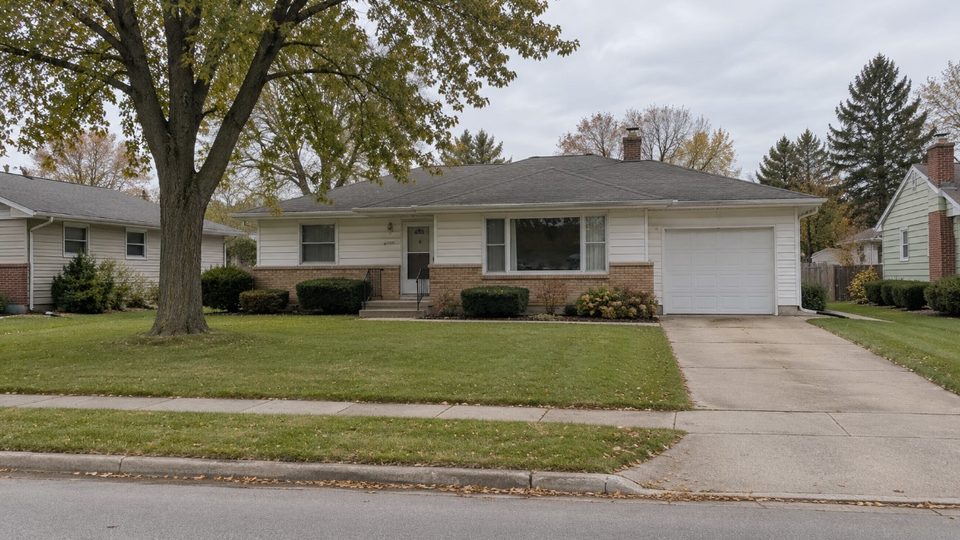
Directly on the Rock River
Afton sits on the Rock a few miles south of Janesville and carries the river gauge that the whole county watches during high water. Properties here have the most direct groundwater relationship with the river of anywhere we cover: when the Rock rises, the water table under Afton rises with it, and it does so quickly.
In June 2008 the gauge here recorded the event that defined flooding in southern Wisconsin for a generation. That is the extreme, but the ordinary version happens most springs and it is the reason a basement that is dry all summer can take water on a clear day in March.
Serving Afton, WI
Call and tell us what is happening in your Afton property. A specialist will talk it through with you — free, and with no obligation.
(608) 724-1919Free phone consultation.
Flood Recovery That Stopped Halfway
The recurring legacy here, and the most useful thing to know about an Afton property with any high-water history. River water is Category 3 — biologically contaminated — which means porous material that has been in it should come out, regardless of how dry it later feels.
What frequently happened instead: pump it out, run fans for a week or two, and put it back together because the surface felt dry. Drywall and insulation that were wet with river water and left in the wall will have colonized, and the only thing that reaches the room is the smell. If a property took water and nobody opened the walls, that history matters more than anything visible today.
Unheated and Seasonal Buildings
Properties near the water that are not heated consistently through the winter develop a specific set of problems: every surface is colder so the dew point is reached more easily, nobody is moving air, nobody is running a dehumidifier, and nobody notices a slow leak. In a genuinely unheated building, pipes freeze and split and the water runs for as long as it takes somebody to arrive.
Frozen and Split Supply Lines
Rural service runs, unheated crawl spaces and buildings that are empty for stretches. A cold week with nobody in the property is how most of these start, and because the line is usually inside a wall or under a floor, the water goes into the structure rather than across it. See burst supply lines.
What We Get Called About Most in Afton
Ranked by how often it comes up, and tied to the buildings that are actually here rather than to mold in general.
- Directly on the Rock RiverAfton sits on the river south of Janesville and carries the USGS gauge that the whole county watches during a flood. Properties here have the most direct groundwater relationship with the river of anywhere we cover.
- Flood recovery that stopped halfwayThe recurring problem after any high-water year: wet material dried in place and left in the wall, because removing it felt like overkill at the time.
- Unheated and seasonal buildingsProperties near the water that are not heated consistently through the winter. Cold surfaces, still air and no dehumidification.
- Frozen and split supply linesRural service runs and unheated crawl spaces. A cold week with nobody in the building is how most of these start.
Neighborhoods and Sections We Cover in Afton
Mold Services Available in Afton
Mold Inspection
Thermal imaging and moisture metering to find the source before anything is opened up.
Basement Mold Removal
The dominant mold problem in Afton — finished basement walls, limestone and block foundations, and sump failures.
Black Mold Removal
Full containment for water-damage indicator species, plus finding the sustained water source that let it establish.
Attic Mold Removal
Sheathing and rafter growth traced back to ventilation, bath fans or ice damming.
Water Damage & Flood Mold
Frozen and burst lines, sump failures and Rock River flooding — the 24 to 48 hour response window.
Clearance Testing
Independent verification by someone who did not perform the remediation.
What Mold Work Costs in Afton
General market ranges for south-central Wisconsin, listed for the situations that actually come up in Afton. These are planning figures rather than quotes — nobody can price a job they have not seen, and what moves a number most is the size of the wet area rather than the stained area. The full cost guide explains what drives each one up or down.
| Work | Typical range | Notes |
|---|---|---|
| Mold inspection with thermal imaging and moisture metering | $250–$600 | Most projects should start here |
| Flooded basement — extraction, removal of wet material, structural drying | $2,500–$8,000 | Before any mold work is priced |
| Unfinished basement clean, treat and dehumidify | $1,200–$3,500 | No finishes to remove |
| Crawl space remediation with encapsulation | $3,500–$11,000 | Vapor barrier, sealing, dehumidification |
| Burst supply line inside a wall or ceiling | $1,500–$6,000 | Depends how long it ran before it was found |
| Independent post-remediation clearance testing | $400–$900 | Should not be the same firm that did the work |
Prices shown are examples only. For an accurate quote for your specific situation, call (608) 724-1919 — free consultation with a specialist.
Mold FAQ — Afton, WI
On a property this close to the Rock it is worth at minimum finding out what you actually hold, because a great many owners assume their homeowners policy covers it and it does not. Surface flooding and rising groundwater are standard exclusions everywhere; flood coverage is a separate NFIP or private policy. Check your flood zone designation and check the policy documents rather than the assumption. A burst pipe in the same basement would usually be covered; the river would not be.
Managed rather than eliminated, and it is worth being clear about that. Nothing done inside the building changes the level of the water table. What changes the outcome: a sump system sized to the actual recovery rate of the pit rather than a default, a second pump on a higher float, a battery or water-powered backup, a check valve on the floor drain, nothing porous stored on the slab, and a dehumidifier running from the thaw. Owners who equip properly stop having an annual emergency.
Not at all, and it is a common situation here. If material that was wet with river water is still in the walls, removing it now resolves a problem that has been running quietly ever since. The work is the same as any remediation, and because it is no longer an emergency you can plan it properly. The first step is establishing what is actually behind the finish, which a moisture survey and a small inspection opening will answer.
Either heat it enough to keep surfaces above the dew point and run a dehumidifier on a humidistat, or winterize it properly — water off, system drained, fixtures protected. The failure mode is the middle course: heat set low enough to save money but with water still in the pipes and no humidity control. That gives you cold surfaces, still air, and a live plumbing system in a building nobody visits. See what a winter at 50 degrees does.